Build
Make or source parts using the tools and materials available locally.
An open global ecosystem for building, operating, and connecting affordable radio telescopes. A place where one community’s solution can become another community’s starting point.
ASTRA WORLD starts with the ASTRA 100: a one-metre telescope designed around self-made and commercially available components. Its modular approach gives schools, youth organisations, and independent builders room to adapt the instrument to their own resources.
The goal is an open library of designs, assembly notes, electronics, software, calibration procedures, and documented alternatives. Every improvement can contribute to a shared body of knowledge.
Explore the prototype’s construction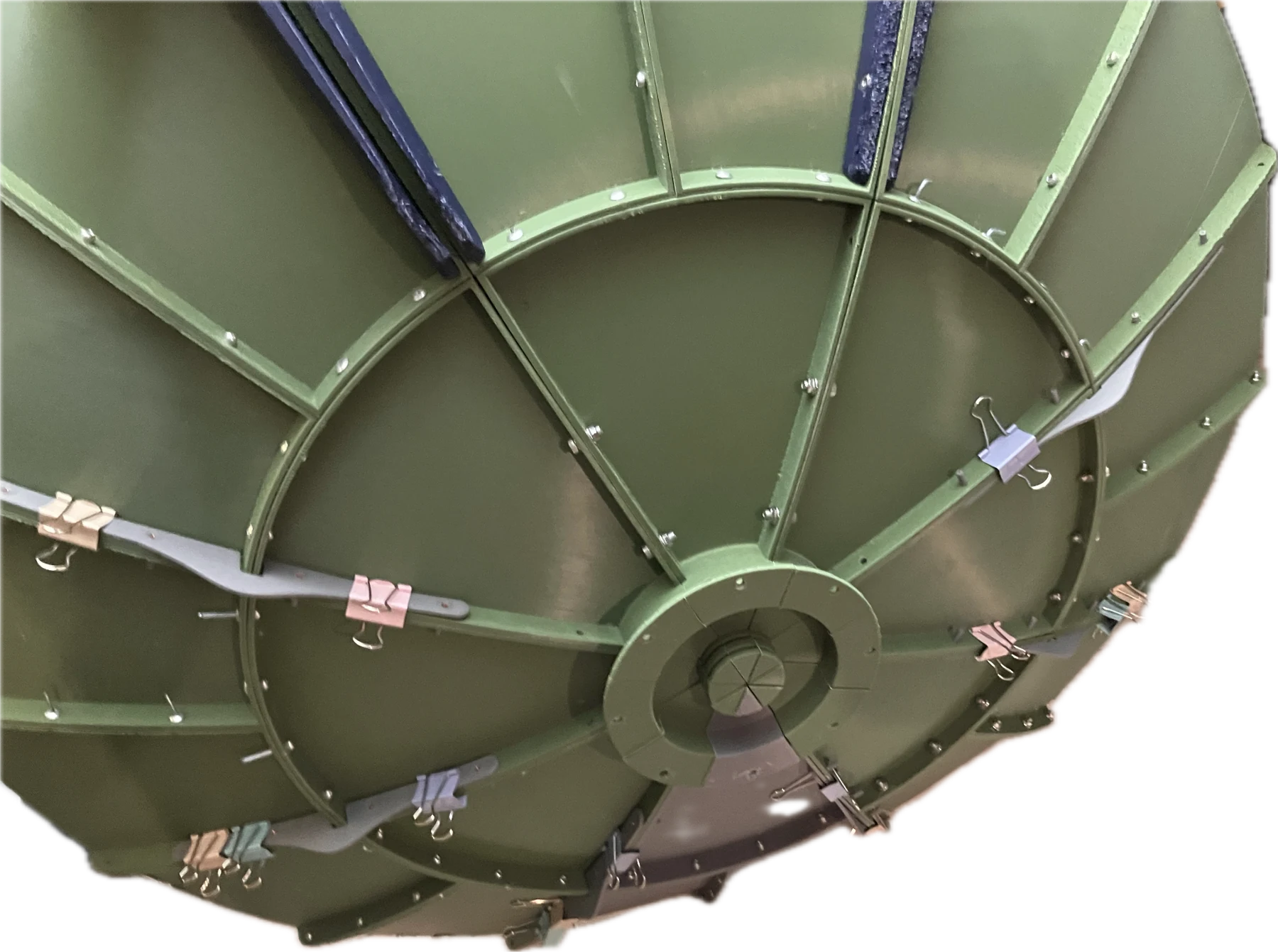
Make or source parts using the tools and materials available locally.
Learn to point, calibrate, and record data with a physical instrument.
Share methods, experiments, and lessons with other builders.
Develop the timing and signal-processing systems for joint observations.
Use shared experiments to ask questions that extend beyond one telescope.
Original ASTRA build photographs and models show the kind of knowledge a future community could share.
A telescope built by one school need not remain an isolated project. As more instruments are constructed, communities could compare observations across locations and coordinate experiments under different observing conditions.
The network starts with ASTRA 100 and grows through shared builds, coordinated observations, and future station connections.
With a working motorised azimuth-elevation system, stations are intended to support repeatable sky scans, target tracking, ON/OFF comparisons, and Milky Way drift scans. Receiver improvements and calibration work are laying the foundation for these observing modes.
Nearby telescopes could eventually combine their signals through precise timing, synchronisation, and correlation. This pathway requires suitable clocks, preserved raw I/Q data, and verification with multiple instruments. Our roadmap starts with paired observations and grows toward a connected array.
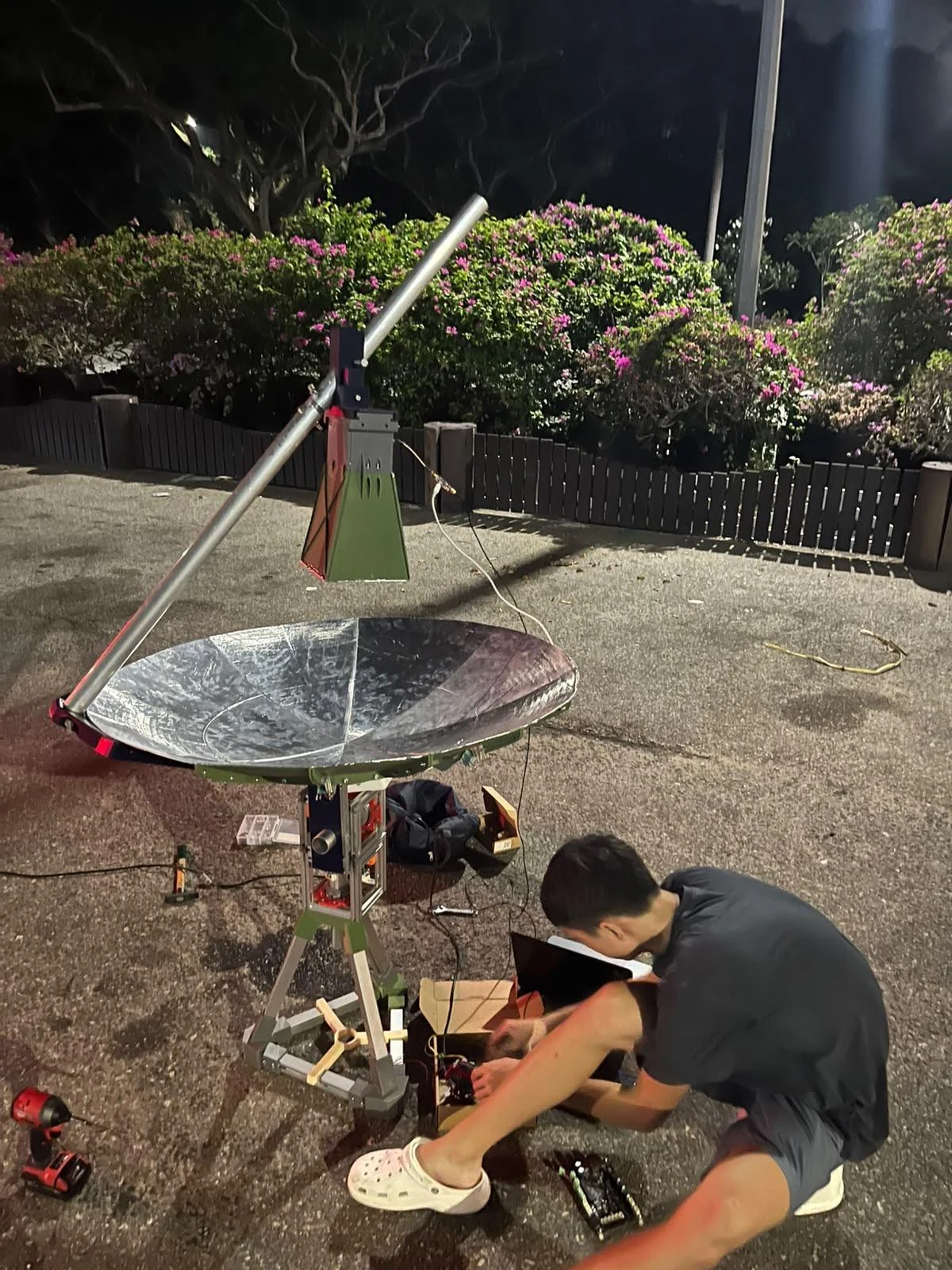
Reported cost of the original prototype, including shipping.
The design aims to substantially lower the cost of participation. Builders could use locally fabricated parts, commercial components, open software, and shared practical knowledge.
Local prices, available tools, shipping, and future revisions will affect the cost of another build. The original tally is a reference, not a universal price.
See the prototype cost breakdownMove from assembling an instrument to understanding the evidence it produces.
Construction connects engineering, electronics, programming, and astronomy. Calibration and data analysis let students experience how scientific measurements are tested.
Modular scientific hardware gives communities a starting point they can adapt. Shared designs reduce the need for every builder to solve the same problems from scratch.
Schools, organisations, and independent observers could share build methods and compare experiments across regions. Collaboration is part of the proposed infrastructure.
Connections to the United Nations Sustainable Development Goals described in the ASTRA WORLD vision.
A failed part, an alternative supplier, or a better calibration procedure can be as useful to the next builder as a successful observation. ASTRA WORLD envisions a space for that accumulated knowledge.
CAD, bills of materials, assembly instructions, software, and documented alternatives, organised by instrument and revision.
Community telescope builds, modifications, repairs, photographs, and explanations of what worked and what did not.
Observation notes, calibration experiments, analysis, and eventually coordinated work between telescope stations.
Look forward to community accounts, shared build journals, and telescope connections in future platform releases.
We’re looking ahead to interactive tools that support real collaboration, from a first build to a shared experiment.
Personal build journals, questions and replies, shared photos and files, and discussions about calibration, repairs, and observation results.
Download hardware and software releases, compare changes, report issues, and contribute alternative parts or local manufacturing methods.
Register stations, publish selected hardware details and availability, find nearby collaborators, and coordinate observing sessions with the owner’s permission.
Explore timing checks, paired observation planning, synchronised recording, and correlation of compatible telescope data. Begin with a validated two-station experiment before scaling further.
Coming in future releases: community accounts, forum discussions, and tools for connecting compatible telescopes.
Explore the prototype that starts this larger idea.